
Imagine this: You’re hunched over your phone, scrolling through emails or social media, unaware of the burden on your neck. By day’s end, a dull ache creeps up your shoulders, maybe even a persistent headache. This isn’t just a bad day—it’s likely “tech neck,” a modern problem fueled by our screen habits. But there’s hope: better posture can be your spine’s savior.
The Weight of the Problem: What is Tech Neck?
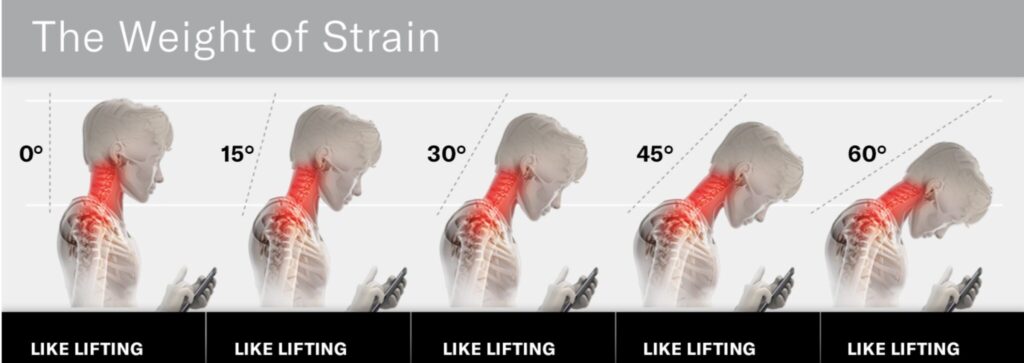
Think of your head as a 10-12 pound bowling ball. When you tilt it forward to look at a screen, the force on your neck increases dramatically—up to 50-60 pounds at a 60-degree angle. This strain disrupts your spine’s natural curve, leading to:
- Aching neck and shoulders
- Reduced mobility and stiffness
- Headaches and jaw pain
- Tingling in arms or hands (from nerve compression)
Poor posture over time can cause more severe problems like herniated discs or chronic pain. The good news? Tech neck is often preventable with simple adjustments.
A Posture Revolution: Why Alignment Matters
Posture is more than looking confident; it’s about aligning your body for optimal function. Good alignment reduces strain on your spine and helps prevent tech neck. Key elements include:
- Neutral Spine: Head directly above shoulders.
- Shoulder Position: Relaxed and slightly back.
- Lower Back Curve: Supported by ergonomic seating or lumbar support.
Proper alignment is the foundation of a healthy spine. Even small habits, like slouching, can lead to chronic pain without it.
Tech Neck Survival Guide: Practical Tips
Here are actionable strategies to fight tech neck:
- Elevate Your Screen: Raise your phone or laptop to eye level. Use a monitor stand or books under your screen.
- Take Frequent Breaks: Every 30 minutes, stand, stretch, or walk. Neck rolls and shoulder shrugs help.
- Try This Simple Exercise: Sitting Knee Pillow Squeezes:
- Strong hips are great, and this is somewhere to start with.
- Sitting knee pillow squeezes can stabilize your spine while sitting.
- How to do it:
- Find a soft ball or pillow to squeeze between your knees.
- Sit upright with feet flat on the floor.
- Place the ball/pillow between your knees.
- Gently squeeze for 5-10 seconds.
- Release slowly.
- Repeat 10-15 times, several times a day.
- Why this works: Engages core and inner thigh muscles, improving sitting posture.
- Seek Help: If pain persists, that’s where Resilient aligns pain solutions can help.
The Bigger Picture: Why This Matters
Tech neck reflects how our digital habits affect our health. It’s a wake-up call that our bodies weren’t made for endless screen time. By focusing on posture and alignment, we can balance technology and health.
A Final Word: Start Small
Improving posture doesn’t require a huge change. Start small: follow the suggested exercise above.
Your spine is asking for help—better posture is its superhero cape. What’s one thing you’ll do today to save your spine? Any questions–give us a call (480)999-5171