
“Let food be thy medicine and medicine be thy food.” – Hippocrates
We live in an age where fast, processed, and sugar-laden foods dominate our plates — while our bodies pay the price in pain, inflammation, and chronic disease. Hippocrates’ timeless advice feels more relevant now than ever.
I learned this lesson in a very personal way.
After injuring my knee hiking in Spain and tearing my MCL, I threw myself into recovery. I did alignment work, and red light therapy. My body was getting stronger and feeling great!
Then came the twist. I bought sandwich fixings for a family gathering and ended up with lots of cheese in the fridge. It had been a while since I’d eaten much dairy, but I didn’t want it to go to waste — so I ate cheese, and then more cheese.
Almost immediately, my knee pain flared like a sudden storm rolling in. My knee, which had been improving, felt inflamed and achy. It wasn’t my alignment exercises that had failed me — it was my food choices that had added fuel to the fire.
That was the moment I understood something powerful: food can either help us heal, or quietly fan the flames of pain.
And here’s the kicker: while food plays a critical role in inflammation, it’s not the whole picture. Misalignment in the body can also trigger inflammation.
Just like a car driving with its wheels out of alignment, the body under mechanical stress wears down faster. Joints become irritated, muscles tighten, and inflammation builds. On the flip side, when your posture is aligned, stress is reduced, movement flows more naturally, and inflammation has less opportunity to take hold.
Food doesn’t correct misalignment 🤓 — but alignment and nutrition together form a powerful one-two punch against chronic pain.
Inflammation: What It Is & Why It Matters
At its core, inflammation is your body’s natural defense system. When something harmful happens — like an injury, infection, or irritant — your immune system sends out signals that increase blood flow, release healing chemicals, and call white blood cells to the scene. Think of it as your body’s built-in fire department, rushing in to repair damage and fight off threats.
There are two types of inflammation:
- Acute inflammation – short-term, helpful, and protective. This is the redness, swelling, and warmth you notice after a cut, sprained ankle, or sore throat. It’s your body healing itself.
- Chronic inflammation – long-term, harmful, and often silent. This happens when the immune system stays “switched on” even when there’s no injury to fix. Over time, this constant low-grade fire can wear down tissues and joints, contributing to conditions like arthritis, fibromyalgia, IBS, autoimmune flare-ups, and even heart disease.
What’s really happening in the body:
When inflammation becomes chronic, the immune system continues releasing chemicals that increase blood flow and activate pain receptors — but instead of helping, they start to damage healthy tissues. This leads to symptoms like stiffness, swelling, fatigue, brain fog, and pain.
In other words, inflammation is meant to be your body’s friend — but when it sticks around too long, it can quietly become your foe. So, what if you could speed up the healing process with posture alignment exercises? They helped me finish the last 50 miles of the Camino de Santiago in Spain with a torn MCL!
What Research Says
Numerous studies affirm what many of us experience firsthand: the foods we eat have a tremendous impact on our overall physical health, inflammation levels, and pain. Here are just a few examples that show how nutrition choices can either increase or decrease inflammation:
- Anti-Inflammatory Diet & Chronic Pain
A pilot study found that increasing intake of anti-inflammatory foods correlated with measurable improvements in pain, stress, and overall well-being (Washington Post, PMC). This confirms that food isn’t just fuel — it can directly affect how much pain we feel day to day. - Dietary Quality & Pain (Population Studies) Read More
In a study of 654 Australians, people who followed healthier diets — rich in fruits, vegetables, whole grains, lean proteins, and some dairy — reported lower levels of bodily pain, regardless of body weight or BMI (Nature). In other words, a nutrient-dense diet may help reduce pain even without changes in weight. - Western Diet & Inflammation Read More
The typical Western diet — high in processed meats, refined grains, added sugars, seed oils, and high-fat dairy — has been consistently linked to systemic inflammation, chronic pain, and metabolic disease (Wikipedia). This is the “silent fire” most of us don’t realize we’re feeding every day. - Gut Health & Fat Types
A 2025 study in Immunity revealed that just two days of high-saturated-fat intake could suppress key gut immune cells, leading to “leaky gut,” systemic inflammation, and bodywide effects. Unsaturated fats, such as those in olive oil and avocado, preserved gut integrity and reduced inflammation. This shows how even short-term diet changes can have an immediate impact. Read More
Taken together, these studies highlight a simple truth: what we eat can either add fuel to the fire of chronic inflammation or help extinguish it.
And just as nutrition influences inflammation, so does the way our bodies are aligned. When joints are misaligned, stress builds up in specific areas, causing irritation and inflammation. On the other hand, when posture is restored, circulation improves, muscles relax, and the body can naturally reduce inflammation.
Food and alignment aren’t separate solutions — they are complementary. Combine them, and the impact on reducing inflammation and pain becomes even more powerful.
Foods That Heal
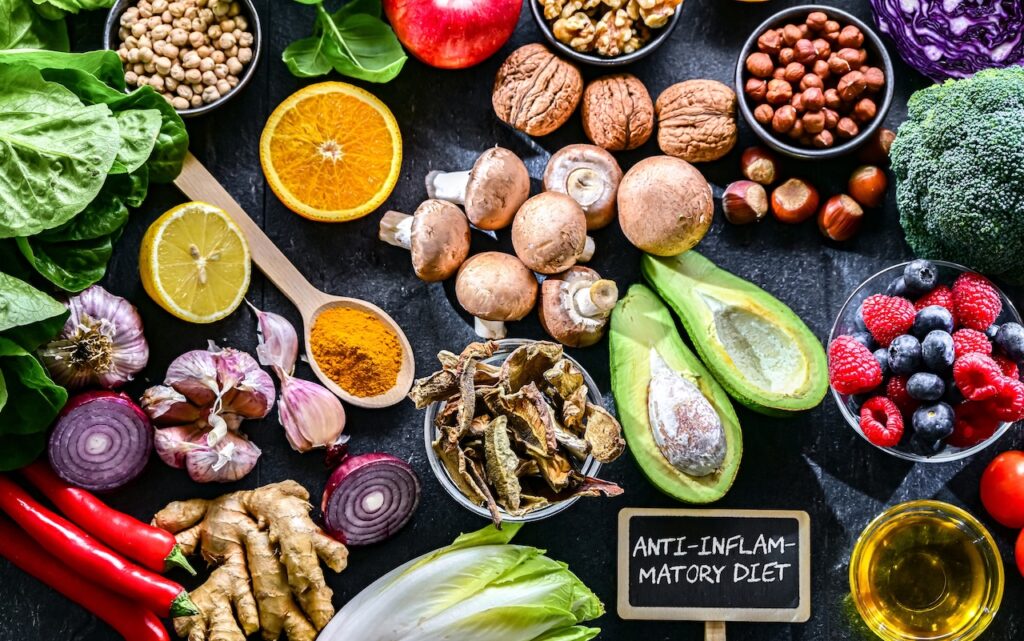
Although many foods increase inflammation in the body, the good news is that some foods actually reduce inflammation. This is the foundation of an anti-inflammatory diet — choosing foods that calm the immune system, support healing, and lower the “silent fire” of chronic inflammation.
For example, adding foods like berries, spinach, kale, and olive oil to your diet can have huge benefits for your joints, energy, and overall health. These foods are rich in antioxidants and healthy fats, which help the body repair damage and reduce inflammatory signals.
Key Foods to Include:
- Fruits & Vegetables: Especially berries, leafy greens, and antioxidant-rich produce.
- Healthy Fats: Olive oil, nuts, seeds, salmon, and other omega-3 rich foods.
- Whole Grains: Brown rice, oats, quinoa.
- Legumes: Beans, lentils, chickpeas.
- Spices: Turmeric, ginger, garlic, cinnamon.
- Healing Staples: Bone broth, fermented foods.
Foods to Limit or Avoid:
- Processed snacks, sugary drinks, and fast food.
- Refined carbs like white bread, pasta, and pastries.
- Excessive red meat and high-fat dairy.
By focusing on anti-inflammatory foods, you’re giving your body the raw materials it needs to calm inflammation, repair tissues, and restore balance — while reducing the foods that keep the fire burning.
Final Thoughts: The Body’s Resilience
Your body is designed to heal — but it needs the right tools. Nutrition, alignment, movement, and rest are not separate silos; they work together.
Bill Stump, in Well Made, reminds us that quality matters: the way you care for your body is like the way a craftsman approaches his work — with intention and respect. Food and posture are no different.
So here’s my advice: listen closely to your body. Sometimes it whispers in subtle ways. And sometimes it shouts in the form of a pain flare-up after a few slices of cheese.
Could food be fueling your inflammation?
Could misalignment be keeping your joints irritated?
You don’t have to guess. With the right combination of nutrition and posture alignment, your body can shift from fighting fires to finding healing.
👉 Ready to explore whether alignment is part of your inflammation story? Schedule an appointment today. Contact Form or call 480-999-5171