
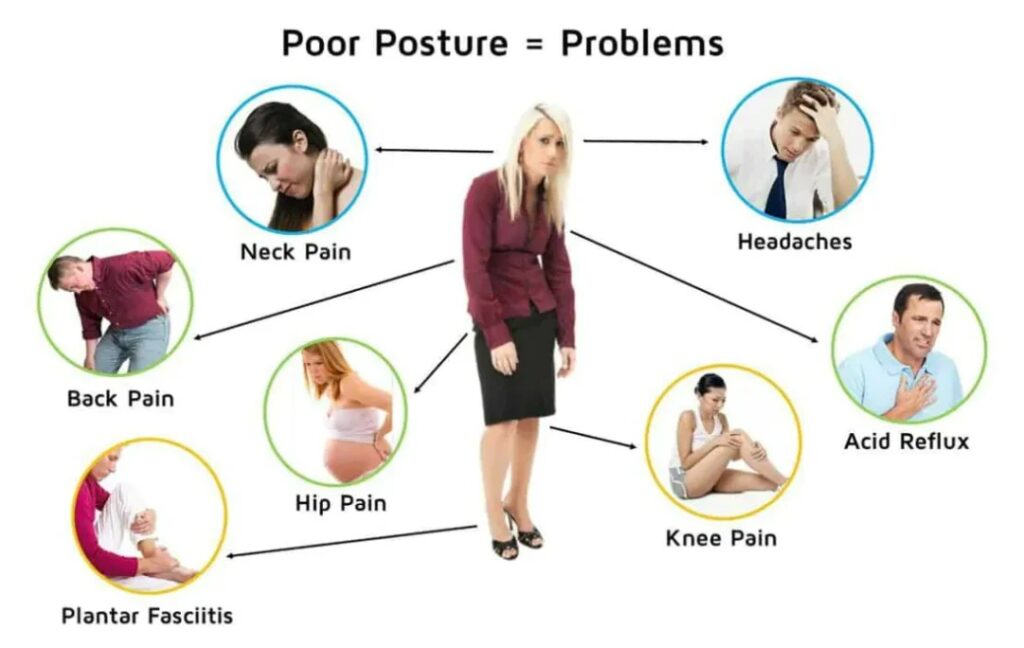
Posture Pitfalls: Are You Setting Yourself Up for Chronic Pain?
Ever catch yourself slouching at your desk or craning your neck to check your phone? You’re not alone—and while it might seem harmless in the moment, poor posture can quietly lead to chronic pain, stiffness, and even nerve problems over time.
In this post, we’ll break down four common posture pitfalls, how to spot them in your own body, and what you can do today to start feeling better.
1. Forward Head Posture (“Text Neck”)
In today’s digital world, it’s easy to let your head drift forward as you scroll, type, or read. But this small shift adds up—your head gains up to 60 extra pounds of pressure on your neck and upper back with each inch it moves forward.
Common signs:
- Your ears sit in front of your shoulders when standing.
- You often feel tension in your neck or upper back.
- Headaches or numbness in the arms and hands may be present.
Why it matters:
Left uncorrected, this posture can compress nerves and lead to chronic neck pain, headaches, and decreased mobility.
2. Rounded Shoulders
Slumped shoulders don’t just affect your appearance—they limit your breathing and restrict shoulder movement. This is a common consequence of desk work, driving, and even gym workouts focused on the front body.
Watch for:
- Shoulders that roll forward.
- Tightness in the chest or upper back.
- A sense of “slouching,” even when you try to stand tall.
Long-term impact:
Rounded shoulders can cause shoulder impingement, upper back strain, and a shortened chest that limits flexibility.
3. Trunk Offset
Ever carry a bag on one shoulder all the time or favor one leg while standing? Over time, these habits cause your trunk to shift off-center, putting uneven stress on your spine and hips.
What to look for:
- One shoulder sits higher than the other.
- Your torso leans to one side when you stand.
- Waistline appears uneven in photos or mirrors.
Result:
This imbalance can contribute to hip pain, low back discomfort, and even sciatica.
4. Misaligned Feet
Feet that turn outward (duck feet) or inward (pigeon toes) disrupt your gait and posture from the ground up.
Red flags:
- Toes don’t point forward when you stand or walk.
- You experience knee, hip, or lower back pain.
- Your shoes wear unevenly on one side.
Over time:
Foot misalignment can lead to plantar fasciitis, Achilles tendinitis, and joint issues in the knees and hips.
How to Spot These Issues in Yourself
Improving your posture starts with awareness. Here are four simple ways to self-assess:
- Stand in front of a full-length mirror and check for symmetry in your ears, shoulders, hips, and feet.
- Take photos of your standing posture from the front, back, and side.
- Ask a trusted friend or family member to observe your posture.
- Tune into your body—tightness, soreness, or favoring one side are all clues.
Don’t Let Posture Problems Become Chronic Pain
Posture isn’t just about how you look—it’s how your body functions. Left unaddressed, these alignment issues can lead to nerve compression, chronic inflammation, muscle imbalances, and long-term pain.
Ready to Reclaim Your Alignment?
At Resilient Align Pain Solutions, we specialize in helping people like you correct posture problems before they lead to lasting damage. Our personalized programs target root causes, improve alignment, and relieve chronic discomfort. Read Real Client Experiences Here
✅ Feel better in your body
✅ Move with greater ease
✅ Prevent long-term pain
Don’t wait for your discomfort to turn into dysfunction. Click Here for your NO OBLIGATION CONSULTATION with Resilient Align Pain Solutions today and start moving toward a pain-free life.